
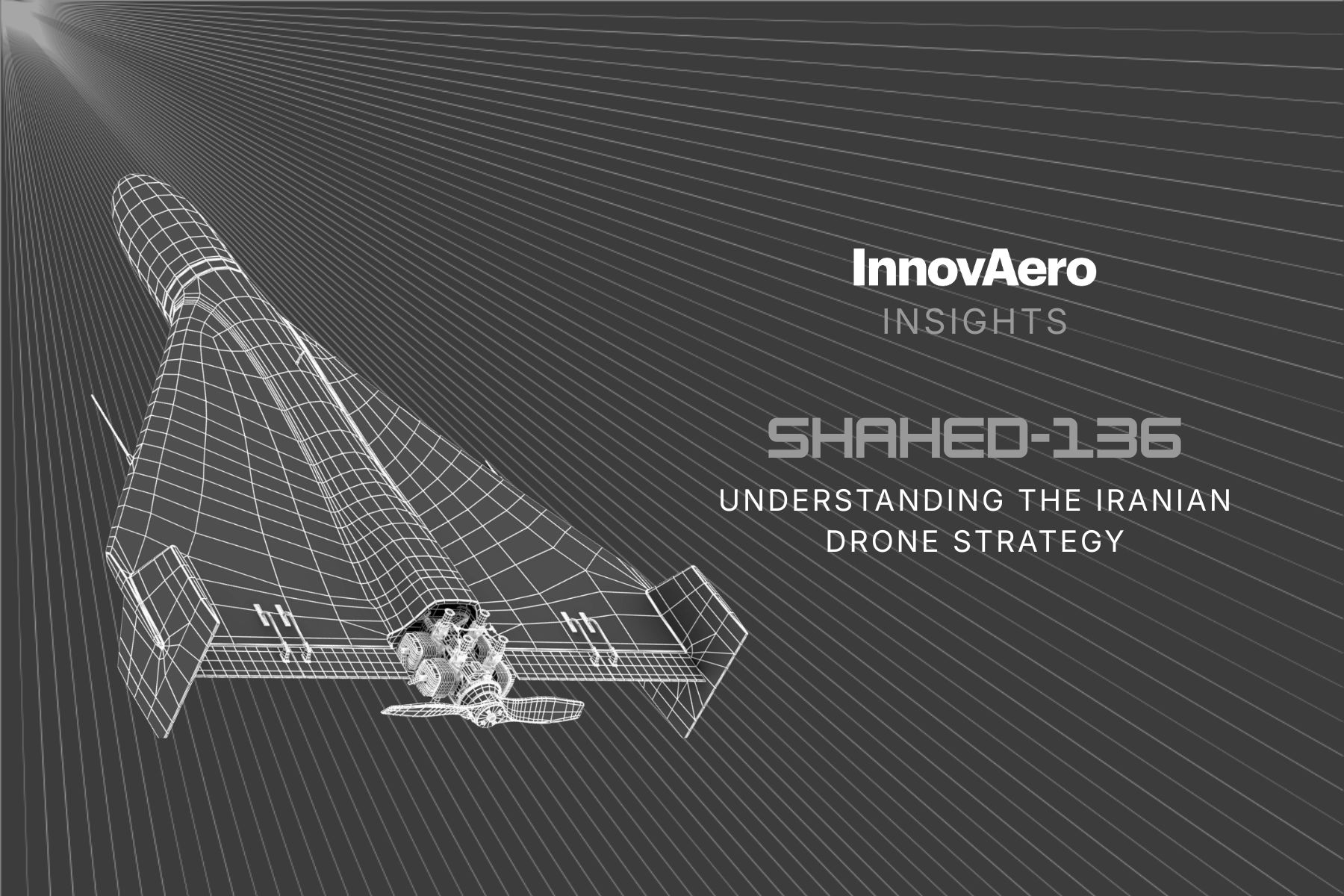
Iran has come to the forefront of discussion within the Unmanned Aerial Aircraft (UAS) defence industry not because of technological sophistication, but because it demonstrates that drones do not need to be cutting-edge or expensive to be effective.
Nothing embodies this better than the Shahed 136: a fixed-wing, fuel-powered loitering munition (“kamikaze drone”) that combines a simple airframe and propulsion system with basic but effective guidance technology.
Its delta-wing design, fibreglass and carbon-reinforced structure, and reliance on satellite navigation systems help keep it lightweight and relatively inexpensive. It uses a small piston engine to drive a rear-mounted propeller and cruises at approximately 140–185 km/h. Its operational range is widely estimated at roughly 1,000–2,500 km depending on configuration and payload; distances comparable to flying from Bandar Seri Begawan to Bangkok or Manila.
The key advantage of the Shahed design lies in cost and scalability. Often estimated in the five-digit USD range per unit, a fraction of a typical Western cruise missile. This allows operators to launch large numbers in a single campaign, potentially overwhelming and exhausting more expensive air defence systems.
This approach was demonstrated during Iran’s April 2024 strike on Israel, which employed a layered, multi-domain attack combining loitering munitions with ballistic and cruise missiles. By mixing different flight paths, speeds, and engagement profiles, the attack was designed to strain and saturate defensive networks.
However, the Shahed’s strengths also highlight its weaknesses. Its relatively slow speed, distinctive engine noise, and predictable flight profile make it detectable by modern air defence systems and even visually identifiable in open-source social media footage.
In practice, layered defence systems such as Iron Dome and MIM-104 Patriot, alongside other integrated air defence assets, have intercepted the majority of incoming drones in high-intensity engagements, including during the 2024 Iran-Israel exchange. What remains unclear, however, is the long-term cost-benefit balance for either side when considering factors such as interceptor costs and operational tempo.
As recent conflicts in the Gulf and in Ukraine continue to drive rapid innovation in UAS, and as state-released data remains limited or strategically curated, comprehensive objective assessments may not be available for years.
Nevertheless, analysts and industry stakeholders continue to monitor how loitering munition technology and broader UAS capabilities evolve in the months and years ahead.
To stay informed on developments in defence, industrial applications, and beyond, follow us or contact InnovAero at:
• Call/WhatsApp: +673 812 5554
• Email: hello@innovaero.co
• Website: innovaero.co
Image credit: 3D Molier International (Editorial License)